


 Zeeshan Khan
 Mar 13, 2026
Table of Contents
Are you worried that the cost of starting a business in Dubai might drain your savings before you even launch? Many entrepreneurs feel stuck because they can’t find a clear answer to exactly how much they need to get started. With so many jurisdictions and fees, it’s easy to feel overwhelmed by the shifting numbers.
The free zone license cost in Dubai is a top priority for your budget, and understanding the breakdown is the first step. Choosing a free zone company setup is often the smartest move for new founders because it offers 100% ownership and tax perks without the need for a local partner.
However, keep in mind that the business license cost in Dubai isn’t a single flat rate; it changes based on your specific business activity, how many visas you need, and whether you require a physical office or a simple flexi-desk.
Overview
If you are looking to launch a business, you can get started with a free zone license in Dubai for approximately AED 11,900 for a basic “zero-visa” package. Keep in mind that your final investment will vary based on your specific business activities, the number of visas you need, and your office requirements. For example, some all-inclusive packages, such as those found at RAKEZ, typically start around AED 14,000. Additionally, if you are looking to work independently, freelance permits are generally available for around AED 7,500 per year.
What Is a Free Zone License in Dubai?
A free zone license is a specialized business permit issued by a specific free zone authority within Dubai. These zones are designated areas that operate under their own set of regulatory frameworks, separate from the UAE mainland.
This license grants your company the legal authority to conduct business operations within that specific free zone or to engage in international trade.
Key Benefits of Free Zone Businesses
Choosing a free zone for your company setup is a preferred route for international investors and startups, as it offers a streamlined environment tailored for business growth. Understanding the benefits of free zone company in Dubai can help entrepreneurs make informed decisions. Some of the primary advantages include:
100% Foreign Ownership
Unlike some mainland business structures that previously required a local partner, free zone companies allow you to maintain full control of your business.
Full Profit Repatriation
You have the freedom to transfer 100% of your capital and profits back to your home country without restrictions.
Simplified Company Registration
The setup process is generally faster and highly digitized, allowing businesses to receive a license shortly after submitting the necessary documentation.
Tax Advantages
Free zones often provide significant tax incentives, including exemptions from certain corporate taxes and import/export duties, which help keep your operational overhead low.
Understanding UAE Free zone tax regulations is crucial for investors, as these rules allow companies to maximize profits while remaining fully compliant with local laws. By leveraging these tax benefits, businesses can achieve greater financial efficiency and long-term growth.
Free Zone License Cost in Dubai (Average Price Range)
Are you feeling overwhelmed by the wide range of pricing you see online? You aren’t alone. The free zone license cost in Dubai varies because it is rarely a “general-purpose” fee. Instead, the final price is determined by the specific package that suits your operational needs.
Entry-level licenses can start from around AED 5,750 for basic packages. These are typically “zero-visa” options designed for minimal administrative needs.
For most small to medium-sized companies, the standard Dubai free zone license cost usually ranges between AED 12,000 and AED 30,000, which often covers the license fee, a basic registration address, and a limited visa quota. For premium or bespoke setups that require prime locations, specialized facilities, or high-volume visa allocations, costs can easily jump to AED 30,000–60,000 or more in the first year.
Business Activity
The type of business activity you choose is one of the biggest drivers of your final bill. Some activities, such as general trading or specialized consultancy, require specific regulatory approvals or carry higher annual fees than standard service-based licenses.
It is important to align your activity codes closely with your actual business operations to avoid paying for unnecessary classifications.
Number of Visas
Your visa quota plays a huge role in your total expenses. Each residency visa for yourself or your team adds to the total Dubai free zone trade license cost.
Most entry-level packages include a very limited quota or none at all, so if you are planning to hire staff or sponsor family members, you must account for the additional government processing fees associated with each extra visa.
Office or Flexi-Desk Requirements
Your workspace choice is a major variable that significantly impacts your overhead.
While a simple flexi-desk keeps your startup costs low and is perfect for remote or digital businesses, requiring a dedicated physical office or a warehouse will naturally increase your price.
Balancing the need for a professional address against the cost of your lease is a key step in managing your business license cost in Dubai.
Cost Breakdown of a Free Zone License in Dubai
Understanding exactly where your money goes is essential for managing your startup budget effectively. While total costs can vary, most licenses are made up of four primary financial pillars.
Trade License Fee
This is the core annual cost to keep your business operating legally within the jurisdiction. You can generally expect to pay between AED 10,000 and AED 25,000 per year for this, though the final figure is heavily dependent on the specific free zone you choose and your selected business activity.
Registration and Setup Fees
When you first launch your company, you will encounter one-time registration and setup charges. These cover the initial paperwork, name approval, and administrative processing required to get your company incorporated with the authority.
Office or Workspace Cost
Your choice of workspace is one of the most flexible ways to control your overhead. A flexi desk, a shared, temporary workstation, is perfect for startups and usually costs between AED 5,000 and AED 15,000 per year.
If your operations require a more permanent presence, a private office will typically range from AED 25,000 to AED 100,000 annually, depending on the size and location.
Visa Costs
If you are planning to reside in the UAE or hire employees, you must factor in the cost of residency visas. Fees for investor or employee visas typically range from AED 3,500 to AED 7,500 per person, which covers the processing and issuance of the residency documents.
Understanding Your Total Setup Investment
| Expense Component | Estimated Annual Range (AED) |
| Trade License Fee | AED 10,000 – 25,000 |
| Registration & Setup | One-time fees vary by zone |
| Flexi-Desk | AED 5,000 – 15,000 |
| Private Office | AED 25,000 – 100,000+ |
| Visa Fees (per person) | AED 3,500 – 7,500 |
Affordable Free Zone Options in Dubai
If you are looking for cost-effective ways to establish your business, several Dubai-based free zones are highly favored by startups for their budget-friendly packages.
While prices can fluctuate based on current promotions, these authorities remain among the most competitive choices in the region.
Meydan Free Zone
Meydan is a prime choice for those looking for a prestigious business address combined with competitive pricing.
License packages here often start around AED 12,500. Its central location and modern infrastructure make it an attractive hub for consulting firms and digital businesses that want to balance affordability with a professional corporate image.
IFZA (International Free Zone Authority)
IFZA has become a go-to for many entrepreneurs because of its incredibly flexible and transparent pricing structure. Packages typically range from AED 12,000 to AED 25,000, depending heavily on how many visas you need and whether you require a physical or virtual office.
The ability to bundle multiple business activities onto a single license makes it one of the most versatile and budget-conscious options currently available.
Dubai South Free Zone
Designed with logistics and e-commerce in mind, Dubai South offers highly specialized startup-friendly business packages. Because this zone is positioned as a gateway for global trade and logistics, it is particularly popular for businesses involved in import, export, and regional distribution.
They frequently offer bespoke solutions that allow growing startups to scale their workspace and visa quotas as their business needs develop.
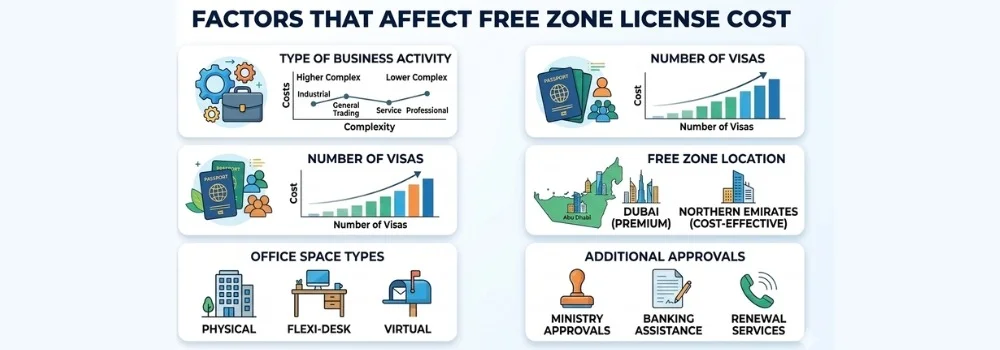
Factors That Affect Free Zone License Cost
Understanding the variables that influence your final bill is the best way to avoid overpaying. While every free zone authority has its own fee structure, the total cost for your free zone license cost in Dubai is consistently shaped by these core factors:
Type of Business Activity
Not all businesses are charged equally. Complex activities such as manufacturing, financial services, or general trading often require higher levels of regulatory oversight and carry steeper licensing fees than straightforward professional service or consultancy businesses.
Number of Visas Required
Your visa quota is a major cost driver. Basic license packages typically include a limited number of visas (or none at all).
If your business requires residency for yourself or your employees, each additional visa will incur extra government processing and issuance fees, increasing your total Dubai free zone trade license cost.
Office Space Requirements
This is often the most significant overhead. While a “flexi-desk” or virtual office keeps your startup costs at the bare minimum, opting for a physical office, warehouse, or showroom will significantly boost your annual expenses.
Free Zone Location
The location matters. Free zones located in the heart of Dubai’s commercial hubs often command a premium due to their prestige and proximity to key business districts.
Alternatively, choosing a Sharjah free zone license cost or a zone in the Northern Emirates can provide a more affordable entry point without sacrificing the benefits of a free zone structure.
Additional Approvals or Services
Some business models require special permits from external government departments, such as the Dubai Health Authority or the Knowledge and Human Development Authority.
Additionally, if you outsource your setup to a firm to handle PRO services, document attestation, or bank account opening, these professional fees will also contribute to your final startup investment.
Annual Renewal Costs
Staying compliant is just as important as the initial setup. In Dubai, free zone licenses are not permanent; they must be renewed annually to keep your business operating legally.
Failure to renew on time can lead to heavy financial penalties, the freezing of your corporate bank accounts, and even the cancellation of residency visas for you and your employees.
Budgeting for Renewals
Typically, the annual renewal fee is comparable to your original license cost, but it is rarely an identical figure. While the license fee itself often stays consistent, your total renewal investment will depend on other recurring operational requirements.
Recurring Expenses to Keep in Mind
Beyond the core license renewal fee, you should always plan your annual budget to include these recurring items:
Office Lease
If your business utilizes a physical office or a flexi-desk, the lease agreement must be renewed alongside your license. This is often a significant portion of your annual above.
Visa Renewals
Residency visas for yourself, your family, or your staff are not lifetime permits. You will need to budget for the renewal of these visas, including government medical testing and Emirates ID processing fees.
Establishment Card & Customs Code
Many free zones require the annual renewal of your company’s establishment card (needed for immigration) and your customs code (if you are involved in trading).
Free Zone vs. Mainland License Cost
Deciding between a Free Zone and a Mainland setup is one of the most critical steps in your business journey.
While Free Zones are famous for their budget-friendly, bundled packages, Mainland companies offer unrestricted access to the local UAE market.
| Business Setup Type | Typical Cost Range (First Year) |
| Free Zone License | AED 12,000 – AED 30,000 |
| Mainland License | AED 20,000 – AED 40,000+ |
Which Option Should You Choose?
The right choice depends entirely on your business goals and where your customers are located.
Choose a Free Zone license if:
- Your clients are international: If you operate an e-commerce store, provide digital consultancy, or work with clients outside the UAE, a Free Zone is usually the most cost-effective path.
- You want to minimize startup costs: You are looking for a sleek, “all-in-one” package that helps you launch quickly without breaking the bank.
- You don’t need a physical shopfront: You are comfortable working from a flexi-desk or virtual office, which keeps your above low.
Choose a Mainland license if:
- You need direct access to the local UAE market: If you want to sell products or services directly to customers across Dubai and other Emirates without needing a middleman or distributor, the Mainland is the way to go.
- You plan to bid on government contracts: Many government and semi-government tenders are exclusively reserved for Mainland-licensed entities.
- You are opening a physical retail store or restaurant: If your business model requires a high-street location to attract foot traffic, a Mainland license provides the necessary operational flexibility.
Steps to Get a Free Zone License in Dubai
Open a business in dubai free zone is a simplified process designed to get you up and running as quickly as possible.
While the specific requirements can vary slightly depending on the authority you choose, the general roadmap remains consistent.
Choose the Free Zone Authority
Not all free zones are the same. Each caters to specific industries such as media, logistics, or technology and offers different levels of support, pricing, and infrastructure.
Research your options carefully to find the one that best aligns with your long-term business goals.
Select Your Business Activity
This is a critical step because your activity defines the type of license you receive. You must be specific and accurate, as your chosen activities determine your regulatory requirements and overall fees.
Ensure your selected activities match your actual business operations to avoid complications later.
Reserve a Company Name
Once you have your activity and location, you need to register your trade name. Most authorities allow you to submit a few options to ensure your preferred choice is available.
Remember to keep the name professional and ensure it complies with local naming regulations.
Submit Application and Documents
After your name is approved, you will submit your formal application along with the required paperwork.
This typically includes passport copies of all shareholders, a business plan, and the necessary legal documentation for your chosen structure. Many free zones now allow this to be done entirely through digital portals.
Receive Your Trade License
Once your documents are verified and your fees are paid, the authority will process your registration. Once finalized, you will receive your official trade license.
With this document in hand, you are legally permitted to operate your business in Dubai, open a corporate bank account, and begin the process of applying for residency visas for yourself and your team.
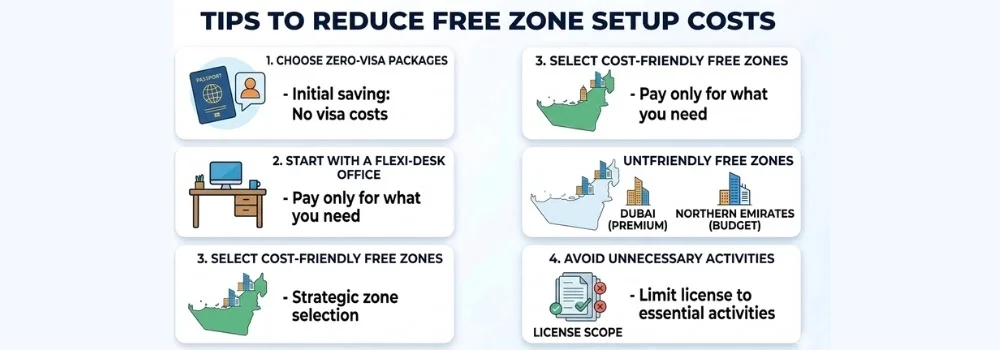
Tips to Reduce Free Zone Setup Costs
Starting a business is a major investment, but you don’t have to overspend to get a professional setup. By making strategic choices during the incorporation process, you can keep your expenses lean. Here are a few expert tips to help you minimize your startup expenses:
Choose Zero-Visa Packages
If you are a solo entrepreneur, freelancer, or digital nomad, you likely don’t need an office full of staff right away. Opting for a “zero-visa” package is one of the fastest ways to slash your initial Dubai free zone license cost.
You can always upgrade your license and add a visa quota later once your business starts generating steady revenue.
Start with a Flexi-Desk Office
Physical office rentals are a significant drain on startup budgets. Instead, look for free zones that offer a “flexi-desk” or virtual office solution.
These options provide you with a prestigious business address and the legal right to operate without the high costs of a dedicated lease, allowing you to work from home or anywhere in the world.
Select Cost-Friendly Free Zones
Not every business needs to be in the most expensive, high-profile hub in Dubai. Research free zones in Sharjah or the Northern Emirates, where the Sharjah free zone license cost, or similar setups, can be significantly lower than those in central Dubai.
If your business doesn’t rely on daily physical client meetings, choosing a more affordable alternative can save you thousands of dirhams annually.
Avoid Unnecessary Business Activities on the License
Every additional business activity you add to your license can increase your regulatory fees. When selecting your activities, be precise. Only include the ones you are actively going to operate.
By keeping your license focused and simple, you avoid paying for unnecessary classifications and extra government approvals that you won’t use.
Who to Consult About Free Zone License Costs in Dubai?
When estimating free zone license costs in Dubai, it is advisable to connect with experienced business setup consultants in Dubai who can offer a comprehensive breakdown of jurisdiction-specific fees and regulatory requirements.
These professionals provide the strategic insight necessary to align your company structure with your operational and budgetary objectives, and firms such as HFA Consulting are well-positioned to guide you through the complexities of licensing and compliance to ensure a cost-effective market entry.
Conclusion
Choosing a free zone license is a highly effective, flexible, and cost-efficient way to launch your business in Dubai. Whether you are a solo freelancer or scaling a larger startup, these jurisdictions provide a tailored environment designed to help your business thrive with full ownership and significant tax advantages.
As we’ve explored, the total investment is not a single flat fee; it scales from budget-friendly “zero-visa” packages to more comprehensive setups that include physical office space and multiple visas. Your final cost will eventually depend on your chosen business activity, your office requirements, and your long-term growth plans.
By carefully assessing these factors and selecting the right free zone authority, you can build a solid foundation that aligns perfectly with your budget and business vision.
FAQS
How much does a free zone license cost in Dubai?
The cost of a free zone license in Dubai is not a fixed amount; it typically costs between AED 10,000 and AED 50,000 per year. Your final price depends on your business activity, the number of visas you need, the free zone authority you choose, and whether you require office space.
What is the cheapest free zone license in Dubai?
For those on a strict budget, some of the most competing options include authorities like IFZA, which offers “zero-visa” packages starting around AED 11,500–AED 12,500 for zero-visa. Entry-level freelance permits in various zones can sometimes be found starting as low as AED 5,750 to AED 8,000, depending on current promotions and specific package inclusions.
How long does it take to get a free zone license?
The process is highly efficient and digitized. In many cases, you can receive your trade license within 3 to 7 working days once all your documents are submitted, verified, and fees are paid.
Can foreigners own 100% of a free zone company in Dubai?
Yes, foreigners can own 100% of a Free Zone company in Dubai. One of the primary advantages of setting up your business in a Dubai , allowing you full control over your business operations and profits.


Zeeshan Khan
My name is Zeeshan Khan, and I’m a UAE-based business and tax consulting professional with hands-on experience in VAT compliance, corporate tax advisory, business setup, and regulatory services. I work closely with startups, SMEs, and established companies to help them navigate UAE tax laws, improve compliance, and make informed financial decisions. With a strong understanding of FTA regulations, corporate structuring, and commercial taxation in the UAE, my focus is on translating complex laws into clear, practical guidance for business owners. Through my writing, I aim to provide accurate, up-to-date insights that help businesses stay compliant, reduce risk, and operate confidently in the UAE market.