

 Zeeshan Khan
 Mar 14, 2026
Table of Contents
If you are planning to move on from your current role or close your business, understanding the free zone visa cancellation process is essential for a smooth departure. Whether you are job hunting elsewhere, permanently leaving the UAE, or wrapping up your company operations, managing your legal status correctly is the best way to avoid unnecessary fines and future travel headaches.
It is important to remember that visa cancellation is not just a formality; it is a critical step in your journey. From Dubai free zone visa cancellation to finalising your paperwork, doing things in the right order, like settling outstanding dues and following specific free zone visa cancellation rules, ensures you leave with a clean slate. Let’s look at how to get this done efficiently.
Overview
The free zone visa cancellation process requires cancelling both your labour card or contract through the free zone authority and your residence visa via immigration, with associated costs usually between AED 80 and 130. Your employer must ensure all financial obligations are cleared, submit necessary documents like passport copies and your Emirates ID, and officially start the application online. Once complete, you will enter a grace period, giving you time to either change your visa status or exit the country.
What Is a Free Zone Visa Cancellation?
At its core, a free zone visa cancellation is the formal legal procedure required to terminate a residence visa that was originally issued under a specific Dubai free zone company.
Because your residency status is directly linked to your employer or the company’s trade license, this process serves as the official “sign-off” that ends that sponsorship relationship.
It ensures your records are updated correctly with the authorities, which is vital for maintaining a clean legal status in the UAE.
When Visa Cancellation Is Required
Understanding when you need to act is the first step toward a hassle-free transition. You will generally need to initiate the Dubai free zone visa cancellation in the following situations:
Employee leaving a job
If you are resigning or your contract is ending, your current employer must handle the free zone employment visa cancellation to release you from their sponsorship.
Company closure or license cancellation
If the business you work for (or the one you own) is shutting down, you must cancel free zone residence visa documentation as part of the formal business exit.
Switching to another employer
To transition to a new company, you must first complete the visa cancellation free zone steps to clear your path for a new work permit and residency application.
Leaving the UAE permanently
If you are relocating abroad, completing the UAE free zone visa cancellation process is mandatory to notify the government that you are no longer a resident, preventing any issues for your future travel.
Who Can Cancel a Free Zone Visa?
It is a common misconception that individuals can handle the entire cancellation process on their own. In reality, the legal responsibility for initiating and completing the free zone visa cancellation process lies with the sponsor. Here is a breakdown of the key parties involved:
The Sponsoring Company or Employer
As the entity that holds your visa sponsorship, the company is legally obligated to initiate the cancellation.
They are responsible for settling your final dues, cancelling your labour contract, and applying to the immigration authorities to formally end your residency under their license. You cannot proceed with the cancellation without their cooperation.
Free Zone Authority
Each specific free zone (such as JAFZA, DMCC, or DDA) acts as the primary regulatory body for the visas issued under its jurisdiction.
They oversee the initial step of the process, the cancellation of the labour card or employment contract, ensuring that all legal and financial requirements have been met before the immigration status is officially updated.
Company PRO or Authorised Representative
Most companies do not handle the paperwork manually; they utilise a Public Relations Officer (PRO) or an authorised business service representative. This individual acts as the bridge between the company and the government authorities.
They are experts in the free zone visa cancellation rules and are tasked with submitting documents, paying the necessary fees, and ensuring the application moves through the system without delays.
In short, while you, as the employee, must provide your passport and Emirates ID to facilitate the process, the actual “button-pushing” and legal filing are the duties of your employer and their authorised team.
Free Zone Visa Cancellation Process (Step-by-Step)
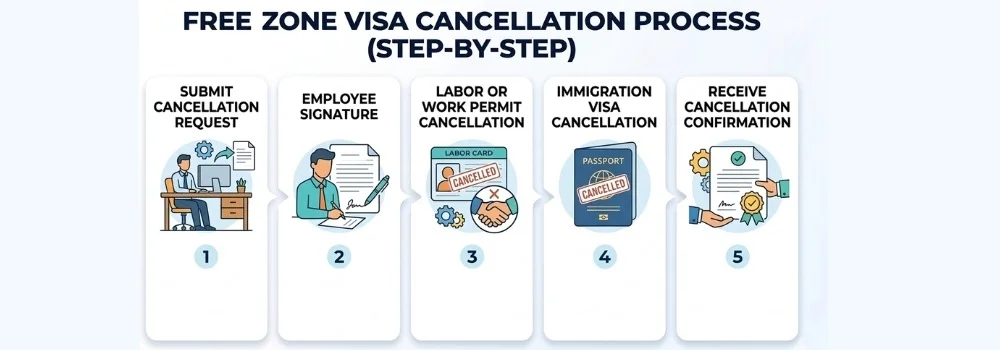
Navigating the free zone visa cancellation process might seem daunting, but it becomes much simpler when you break it down into clear, actionable steps. Below is the standard flow for a smooth transition.
Step 1: Submit Cancellation Request.
The process begins when your employer officially submits the visa cancellation request to the relevant free zone authority. This serves as the formal notification that your employment or sponsorship agreement is coming to an end.
Step 2: Employee Signature
To ensure transparency and legal compliance, you will be required to sign the cancellation form. By signing this, you are formally acknowledging the termination of your visa and confirming that you are aware of your status change.
Step 3: Labour or Work Permit Cancellation
Before the residency visa can be addressed, the labour or work permit linked to your employment must be cancelled first. This step clears your professional status within the free zone system and is a mandatory prerequisite for the final immigration step.
Step 4: Immigration Visa Cancellation
Once the labour side is settled, the company proceeds with the Dubai free zone visa cancellation through the immigration department. This is the crucial stage where your residency status is officially voided in the national database.
Step 5: Receive Cancellation Confirmation
After the authorities approve the application, you will receive an official cancellation document. It is vital to keep a digital and physical copy of this confirmation, as it proves that you have successfully finalised the UAE free zone visa cancellation process and are no longer tied to that company’s license.
Step 6: Settle the Free Zone License Cost
After your visa cancellation is processed, you should also account for the free zone license cost. Depending on the specific free zone, there may be cancellation fees related to the company’s license. These fees could include outstanding charges for the license, early termination penalties, or other administrative costs.
Documents Required for Visa Cancellation
To ensure the free zone visa cancellation process moves forward without unnecessary roadblocks, you must have your paperwork in order.
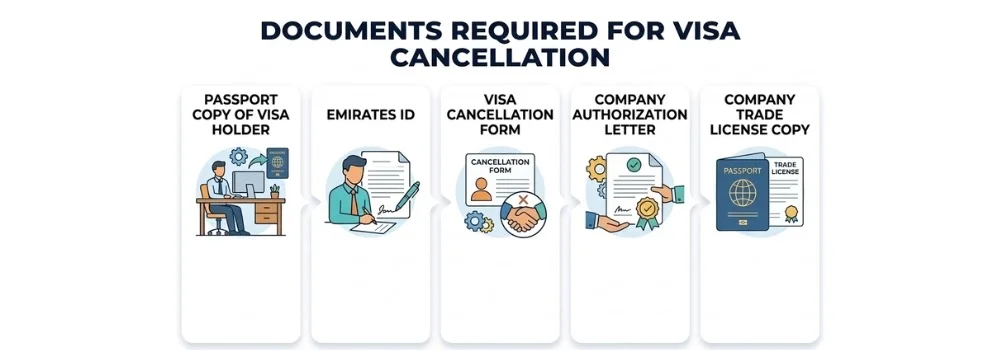
While requirements can vary slightly depending on the specific free zone, you will typically need to provide the following documents to your employer or PRO:
- Passport copy of the visa holder: A clear scan or copy of your passport is required for the authorities to verify your identity and current travel document details.
- Emirates ID: You will need to provide your original Emirates ID card, as this will eventually need to be surrendered or processed alongside your residency cancellation.
- Visa cancellation form: This is the official request form that requires your signature to confirm the termination of your visa and labour contract.
- Company authorisation letter: Depending on the free zone, the company may need to provide a formal letter authorising the cancellation on their official letterhead.
- Company trade license copy: In many cases, the current, valid copy of the company’s trade license is required to prove that the entity is authorised to sponsor visas and initiate the cancellation.
Having these documents ready early will help minimise the Dubai free zone visa cancellation time and prevent the process from stalling due to missing information.
Processing Time for Free Zone Visa Cancellation
Generally, the free zone visa cancellation process is quite efficient, typically taking anywhere from one to five working days to complete.
However, please keep in mind that the actual Dubai free zone visa cancellation time can vary based on a few key factors. The specific free zone authority you are dealing with has its own internal workflows and digital systems, which directly influence how quickly they process applications.
Additionally, delays most often occur if there are missing documents, incorrect details, or if the sponsoring company has pending fines or compliance issues that need to be resolved before the cancellation can proceed.
While authorities continue to move toward fully digital and integrated systems to improve speed, occasional system updates or public holiday backlogs can still impact the overall timeline.
To ensure your request moves as fast as possible, it is always a good idea to stay in close communication with your company’s PRO or the authorised representative handling your file, as they can provide the most accurate estimate based on the current status of your application.
Free Zone Visa Cancellation Cost
It is important to note that the total cost for cancelling your visa is not a fixed price; it fluctuates depending on the specific free zone authority where your company is registered. Generally, the costs you encounter will cover government processing fees and administrative service charges.
To help you budget, here is a general breakdown of the types of costs involved:
| Cost Component | Description |
| Government Processing Fees | The mandatory fees charged by the immigration department and the free zone authority for official document processing. |
| Administrative Service Charges | Fees levied by the free zone or the company PRO for the time, labour, and handling of your paperwork. |
| Estimated Total Range | While costs depend on the specific zone, most individuals should expect a total range between AED 500 and AED 1,500. |
Please remember that these figures are estimates. If you use a private typing centre or a specialised PRO agency to expedite the process, you may face additional convenience fees.
Always confirm the exact final cost with your HR department or the company PRO before the process begins to avoid any unexpected expenses.
Grace Period After Visa Cancellation
Once your visa is officially cancelled, the UAE provides a grace period that allows you to remain in the country legally. This window is designed to give you enough time to either secure a new job, switch to a different visa status such as a visit or investor visa or make the necessary arrangements to depart the country permanently.
While the standard grace period for most employment visas is 30 days, it is important to note that this can vary based on your specific visa category. For example, some special categories, such as Golden or Green Visa holders, may be granted significantly longer periods of up to 180 days.
It is vital to keep track of your status through official portals like the ICP or GDRFA to confirm the exact duration you have been granted. Please remember that this grace period is a strict deadline; overstaying beyond this time will result in daily fines.
Given the current fluid nature of travel in the region, if you are planning to leave the country, it is highly recommended that you verify your flight status regularly and plan your departure well before your grace period expires.
Free Zone vs. Mainland Visa Cancellation
While both types of visa cancellation aim to achieve the same result—officially terminating your residency status, the regulatory path you follow differs based on whether your company is registered in a free zone or on the mainland.
Understanding the difference between freezone and mainland visa cancellation is crucial for ensuring the correct legal procedures are followed and to avoid unnecessary delays or fines. Here’s how the process differs:
| Factor | Free Zone Visa | Mainland Visa |
| Primary Authority | Managed through the specific Free Zone Authority (e.g., DMCC, JAFZA). | Managed through the Ministry of Human Resources and Emiratisation (MOHRE). |
| Process | Handled internally via the Free Zone’s portal or administrative office. | Requires processing through MOHRE for labour cancellation, followed by GDRFA/ICP for immigration. |
| Regulations | Governed by the rules and bylaws of the individual free zone. | Governed by federal UAE labour laws and federal immigration regulations. |
Understanding these differences is key. Free zone companies typically manage their own internal processes, which can often be faster because they don’t always require as many external government approvals as mainland entities.
However, because mainland visas are regulated at the federal level, their cancellation process is highly standardized across all emirates, whereas free zone procedures can vary slightly from one zone to another.
Regardless of the type of visa, the most important rule remains the same: ensure your sponsor clears all pending obligations to prevent any legal complications.
Common Mistakes to Avoid
The free zone visa cancellation process is generally straightforward, but it can quickly become complicated if you aren’t careful. Many of the delays and legal headaches people face are entirely preventable by simply avoiding these four common mistakes:
Not Cancelling the Work Permit First
This is perhaps the most frequent oversight. You cannot move forward with your residence visa cancellation until the associated work permit (or labour card) has been officially cancelled through the free zone authority.
Attempting to bypass this step or waiting too long to initiate it will inevitably stall your residency application and can lead to administrative complications.
Missing Required Signatures
The cancellation form is a legal document that must be properly signed by both the sponsor (the company) and the visa holder (you). If the form is submitted without the necessary signatures or if the company stamp is missing, the authorities will reject the application.
Always double-check that every field has been completed and signed before your PRO submits the file.
Delays in Submitting Documents
Procrastination is your enemy during this phase. If you delay handing over your original passport or Emirates ID, or if you fail to provide necessary supporting documents on time, you risk missing critical internal deadlines set by the free zone authority.
These delays can lead to unnecessary extensions of your visa status, which can sometimes interfere with your ability to start a new job or travel. Moreover, if your visa status extends beyond the allowed time frame, you may face complications not just with your visa, but also with your compliance with UAE Free zone tax regulations. Free zones often have their own specific tax rules and deadlines that need to be followed. Failure to comply with these regulations can lead to financial penalties or other legal complications, so it’s important to ensure that everything is submitted on time to avoid these issues.
Ignoring Grace Period Rules
Many people mistakenly believe they have unlimited time to “figure things out” after their visa is cancelled. In reality, you are under a strict deadline dictated by the government.
Overstaying your legal grace period, which is typically 30 days for most employment visas, will result in daily fines. It is essential to track your timeline from the date of the official cancellation confirmation and either finalise your exit or switch to a new visa status well before that period ends.
Who to Consult for Free Zone Visa Cancellation Process
For a smooth experience, you should primarily consult your company’s Human Resources (HR) department or the designated Public Relations Officer (PRO), as they are the authorised representatives responsible for initiating the legal cancellation process through the specific free zone authority.
If your company lacks an internal team to handle these administrative hurdles or if you require expert guidance to navigate complex compliance requirements, engaging professional business setup consultants in Dubai, such as HFA Consulting, can be a highly effective way to ensure all documentation is handled correctly, avoiding delays or costly errors.
Conclusion
The free zone visa cancellation process is straightforward when the required steps are followed correctly and in the proper order. By ensuring your paperwork is complete and your employer handles the necessary filings, you maintain full compliance with UAE immigration regulations.
Ultimately, completing the process on time is the best way to protect your legal status, allowing you to move forward to your next chapter without the stress of unnecessary penalties or legal complications.
FAQ
How do I cancel a free zone visa in Dubai?
The cancellation must be initiated by your employer or sponsor. They are responsible for submitting the request through your specific Free Zone Authority’s portal or office, cancelling your work permit, and then finalising the residency visa cancellation through immigration.
How long does a free zone visa cancellation take?
The process is typically completed within 1 to 5 working days. However, the exact timeline depends on the efficiency of the specific free zone authority, the accuracy of the submitted documentation, and whether the company has any pending fines or compliance issues to resolve.
Is there a grace period after visa cancellation?
Yes. After your visa is officially cancelled, you are granted a grace period usually ranging from 30 to 180 days, depending on your specific visa category, to either exit the UAE or switch to a new visa status. It is crucial to verify your exact grace period through the official ICP or GDRFA portals.
Can a free zone visa be transferred to another company?
No, a visa cannot be directly “transferred” between companies in the same way you might transfer a phone number. If you change employers, your old visa must be officially cancelled by your previous sponsor, and your new employer must then apply for an entirely new residency visa for you under their company license.


Zeeshan Khan
My name is Zeeshan Khan, and I’m a UAE-based business and tax consulting professional with hands-on experience in VAT compliance, corporate tax advisory, business setup, and regulatory services. I work closely with startups, SMEs, and established companies to help them navigate UAE tax laws, improve compliance, and make informed financial decisions. With a strong understanding of FTA regulations, corporate structuring, and commercial taxation in the UAE, my focus is on translating complex laws into clear, practical guidance for business owners. Through my writing, I aim to provide accurate, up-to-date insights that help businesses stay compliant, reduce risk, and operate confidently in the UAE market.