


 Zeeshan Khan
 Mar 17, 2026
Table of Contents
Opening a business in a foreign country usually means drowning in endless paperwork, high taxes, and the headache of finding a local partner you can trust. Many entrepreneurs put their dreams on hold because the barrier to entry feels impossible.
They worry about losing control of their company or seeing their hard-earned profits eaten up by hidden fees and complex regulations before they even make their first sale.
That is why Dubai free zones have become the ultimate shortcut for global success. By choosing a Dubai free zone company setup, you get 100% ownership of your business, zero personal income tax, and a surprisingly simple registration process.
In this guide, we will break down the exact steps to open a free zone company in Dubai, including the costs, requirements, and how to get your trade license in just a few days.
Overview
To start a business in a Dubai free zone, you simply need to pick a zone that fits your industry, define your business activity, and apply for your license. The entire Dubai free zone business setup process is remarkably fast, usually taking just 5 to 10 working days while allowing you to keep 100% control of your company.
The core steps to open a free zone company in Dubai involve choosing your legal structure (FZE or FZC), registering a unique trade name, and securing your office space. Once your business registration is confirmed, you can finalize your visa applications and start operating your new venture immediately.
What Is a Dubai Free Zone?
A Dubai free zone is a specific geographic area designed to make it as easy as possible for international entrepreneurs to launch and grow a business. Think of it as a “business-friendly bubble” within the city that operates under its own unique set of regulations.
These areas were created specifically to attract global investment by removing the traditional barriers that usually come with starting a company abroad.
Inside these zones, your business has the freedom to trade globally and operate within the free zone’s boundaries without the need for a local partner.
This setup gives you total control over your operations and profits, making it the most popular choice for anyone looking to tap into the Middle Eastern market while maintaining a lean, efficient structure.
Key Benefits of Free Zone Businesses
When you decide to open a business in dubai free zone, you gain access to advantages that are hard to find anywhere else in the world. Many entrepreneurs also explore the benefits of free zone company in Dubai, as UAE free zones offer investor-friendly policies, simplified regulations, and strong international connectivity.
Here is why so many business owners choose this path:
100% Foreign Ownership
Unlike other structures where you might need a local partner, here you hold full control of your company. You are the sole owner, making all the decisions for your brand.
Full Profit Repatriation
You have complete freedom to move your money. You can transfer 100% of your capital and profits back to your home country whenever you want, without any restrictions or extra fees.
Simplified Registration Process
The Dubai free zone business registration is built for speed. Because the rules are streamlined, you spend less time on red tape and more time getting your business off the ground.
Business-Friendly Regulations
These zones are designed to support your growth. With tax exemptions and simple reporting rules, the company formation process in the Dubai free zone is designed to keep your business lean and your operations running smoothly.
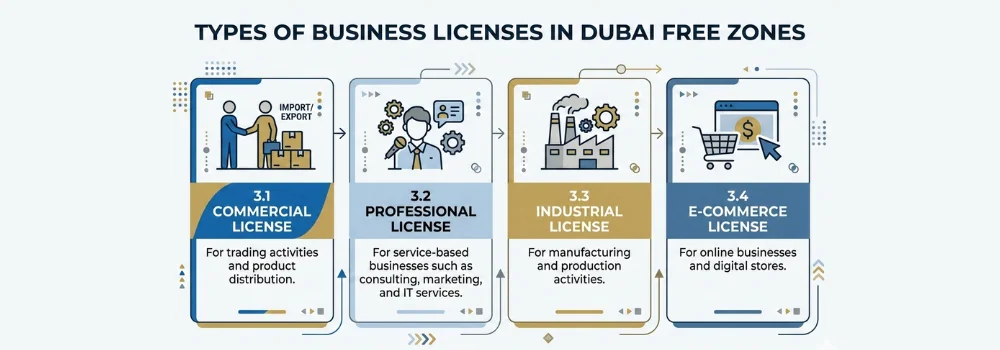
Types of Business Licenses in Dubai Free Zones
To set up a company in the Dubai free zone, you must first select the right license for your business activities. Choosing the correct one is vital to ensure you stay compliant and operate smoothly. It is also important to understand the free zone license cost in Dubai, as the price can vary depending on the type of license, business activity, and the free zone authority you choose.
Commercial License
This is the go-to choice if your business involves trading goods or distributing products. Whether you are buying and selling locally or importing and exporting, this license covers your commercial operations.
Professional License
Perfect for service-based businesses, this license is designed for experts like consultants, marketing agencies, and IT professionals. It validates your skills and allows you to offer your services legally within the free zone.
Industrial License
If your business plan involves manufacturing, processing, or packaging goods, you will need this license. It is specifically bespoke for companies engaged in production activities that require specialized facilities.
E-Commerce License
With the rise of digital retail, this license is ideal for online stores and digital platforms. It allows you to sell products or services directly to customers over the internet, providing a clear path for your online business to prosper.
Steps to Open a Business in Dubai Free Zone
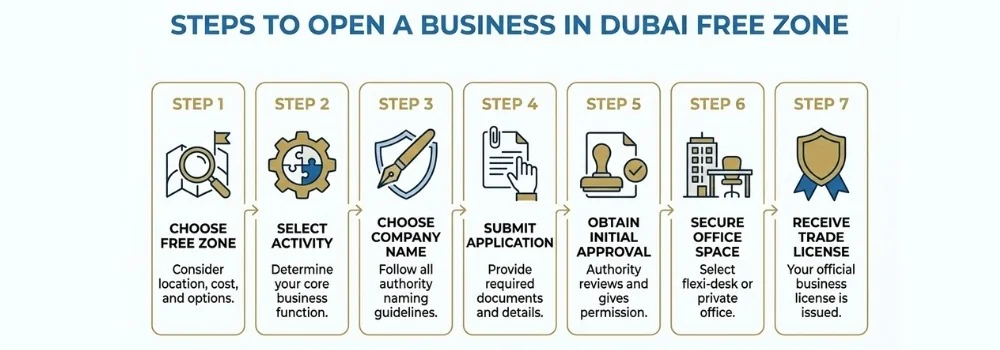
Navigating the Dubai free zone business setup process is straightforward if you follow these seven key steps. By breaking the journey down, you can move from an idea to a fully licensed company with confidence.
Step 1: Choose the Right Free Zone
Not every zone is the same. You need to pick one based on your specific business activity, your budget, where you want to be located, and how many visas you will need for your team.
Step 2: Select Your Business Activity
Be precise about what your company will do. The Free Zone Authority needs to know exactly which services or goods you are providing so they can issue the correct license.
Step 3: Choose a Company Name
Every free zone has its own naming rules. Your name must be unique, follow local guidelines, and typically include your company structure (like FZE or FZC) at the end.
Step 4: Submit the Application
This is where you hand in your paperwork. You will need to provide the required documents, shareholder details, and the specific business plan for your new venture.
Step 5: Obtain Initial Approval
Once your application is submitted, the authority will review everything. Once they give the green light, you are officially cleared to move forward with the next phases of your Dubai free zone business registration.
Step 6: Secure Office Space
You don’t always need a massive office. Most free zones offer flexible options like a flexi-desk (a shared workspace), a virtual office, or a private suite, depending on your needs and visa requirements.
Step 7: Receive Your Trade License
Once the final paperwork is signed and fees are paid, your license is issued. This is the official document that allows you to start trading and doing business in Dubai.
Documents Required to Open a Free Zone Company
Getting your paperwork right the first time is the secret to a fast and smooth approval. While requirements can vary slightly depending on the specific free zone you choose, you generally need to have these core documents ready to go:
- Passport Copies: You will need clear, color copies of the passports for all shareholders and directors involved in the company.
- Passport-Size Photographs: Have a set of recent, high-quality passport photos ready, as these are almost always required for your official registration files.
- Business Plan: Many free zones will ask for a simple, clear summary of your business activities. This doesn’t need to be a massive document—just a clear explanation of what your company will be doing and how it will operate.
- Application Forms: You will need to complete the specific registration forms provided by your chosen Free Zone Authority. These cover your company details, the chosen trade name, and the legal structure of your business.
Keep digital and physical copies of everything. Having your documents organized in a single folder will save you a lot of stress during the final submission stage.
Cost of Opening a Business in Dubai Free Zone
The total investment required to start a business in a Dubai free zone varies based on your specific needs. While prices fluctuate, it is helpful to look at the main categories that make up your setup budget.
| Cost Category | Description |
| License Fee | The annual fee paid to the Free Zone Authority to operate your specific business type. |
| Company Registration | A one-time or recurring fee for registering your business entity. |
| Office Space Cost | Varies widely from affordable flexi-desks to private, high-end office suites. |
| Visa Fees | Costs associated with processing residency visas for you and your staff. |
What Causes Your Total Cost?
It is important to remember that there is no “one size fits all” price tag. Your final costs depend heavily on these three factors:
- The Free Zone You Select: Some zones are built for premium corporate needs and carry higher fees, while others offer budget-friendly packages specifically for startups and small businesses.
- Your Business Activity: The complexity and regulatory requirements of your industry (like trading vs. consulting) will determine the type of license you need and its associated price.
- Number of Visas: The more employees or dependents you need to sponsor, the higher your total investment will be.
Before committing, it is always a good idea to get a custom quote from your chosen free zone so you know exactly what to expect.
Popular Free Zones in Dubai
Dubai is home to several specialized free zones, each designed to help specific industries thrive. Choosing the right one depends largely on your business sector and the type of community you want to join.
Dubai Multi Commodities Centre (DMCC)
Consistently ranked as one of the world’s best, this is the place to be if you are in commodities trading, think precious metals, diamonds, tea, and coffee. Located in the heart of the city, it offers a high-end, vibrant environment for businesses of all sizes.
Dubai Internet City (DIC)
This is the region’s largest IT and tech hub. If your focus is software development, telecommunications, or digital innovation, this is where you will find the world’s biggest tech giants and a community dedicated to digital growth.
Dubai Media City (DMC)
The go-to spot for the creative world. It serves as a regional base for news agencies, advertising firms, production houses, and publishing companies, offering a collaborative space for creative professionals.
Meydan Free Zone
Known for being incredibly flexible and cost-effective, this zone is perfect for startups, freelancers, and small businesses. Its location near downtown Dubai and its simplified, fast-track licensing process make it a favorite for new entrepreneurs.
IFZA Free Zone
This is one of the most dynamic and popular options for small business owners today. It is widely praised for its affordability, quick digital registration, and ability to handle a wide range of consultancy and trading activities under one license.
Visa Options for Free Zone Businesses
When you form a company in a Dubai free zone, you aren’t just getting a business license; you are opening the door to legal residency in the UAE for yourself, your team, and your family. The visa options are flexible and designed to support your growth.
Investor Visa
As a business owner, you are eligible for this visa. It is designed for shareholders and partners, giving you long-term residency status tied directly to your company ownership.
Employee Visa
Once your company is up and running, you can sponsor your staff. This allows you to legally hire talent from both inside and outside the UAE to help grow your business.
Dependent Visa
Once you hold your own residency visa, you can sponsor your immediate family, including your spouse, children, and sometimes parents, so they can live with you in Dubai.
A Note on Visa Limits
It is important to understand that your visa quota, the number of visas you are allowed to sponsor, is not unlimited. It is usually tied directly to your office space and the specific package you choose during your setup.
For example, a “flexi-desk” or co-working package might only allow for 1–3 visas, while renting a dedicated physical office or a warehouse will allow you to sponsor a much larger team.
If you find your business growing faster than expected, don’t worry, most free zones allow you to increase your quota by upgrading to a larger office space or choosing a different package.
Advantages of Starting a Free Zone Business
When you look at the big picture, the benefits of choosing a free zone for your company go far beyond just saving on taxes. Here is why it remains a top choice for international entrepreneurs:
Full Ownership for Foreign Investors
You retain 100% control of your company. There is no requirement for a local partner, which means you have the final say on all business decisions and you keep your entire profit.
Easy Company Formation Process
Everything is built to be efficient. From online registrations to centralized support services, the Dubai free zone business setup process is designed to minimize your stress and get you moving quickly.
Access to Global Markets
Located at the crossroads of the world, Dubai offers a strategic gateway. Whether you are trading within the Middle East, Europe, or Asia, you are perfectly positioned to reach international customers with ease.
Modern Infrastructure and Business Support
You gain access to world-class facilities, high-speed internet, and professional workspaces. Many zones also provide ongoing administrative help, ensuring your business stays compliant and professional.
Tips for Choosing the Right Free Zone
With so many options available, picking the right home for your business can feel overwhelming.
To make the best choice, don’t just look at the lowest price tag; look at the long-term fit for your specific goals. Here are four essential tips to guide your decision:
Compare License Packages
Not all licenses are created equal. Some free zones offer all-inclusive bundles that cover your registration, license, and basic office fees, while others charge for every service separately.
Take the time to look past the “starting at” price and ask for a detailed breakdown of what is actually included to avoid surprise costs later.
Consider Visa Requirements
Your ability to sponsor yourself, your family, or your future employees depends on the visa quota tied to your chosen package.
If you plan to scale your team quickly, ensure the free zone you choose has the flexibility to upgrade your office space and increase your visa quota without forcing you to move to a new jurisdiction.
Check Office Space Options
Your physical presence should match your actual needs. If you are a remote consultant, a virtual office, or a flexi-desk is usually more than enough, and keeps your overhead low.
However, if your business requires a professional image for client meetings or physical stock, prioritize zones that offer dedicated desks, private offices, or warehouse solutions.
Value Business Activity Restrictions
Every free zone has a specific list of activities it allows. Before you fall in love with a location, confirm that they permit your exact business operations.
Some zones are highly specialized, like those focused on media or tech, while others are more general. Choosing a zone that already understands your industry will make your regulatory approvals and compliance much faster.
Who to Consult for Opening a Company in Dubai
Managing the legal, financial, and administrative requirements of company formation independently can be complex and time-consuming. To ensure your business is structured correctly and remains compliant from day one, it is highly recommended to partner with experienced business setup consultants in Dubai who can manage the end-to-end process for you.
These professionals help you select the right jurisdiction, handle document preparation, and coordinate with authorities to avoid costly delays. For custom guidance and support throughout every stage of your company registration, you can reach out to HFA Consulting to streamline your entry into the UAE market.
Conclusion
Dubai free zones offer a remarkably simple and efficient path for entrepreneurs looking to launch their ventures in a world-class business environment. By taking advantage of key benefits like 100% foreign ownership, significant tax advantages, and a streamlined registration process, you can build a solid foundation for your company’s growth.
Ultimately, success lies in choosing the right free zone that aligns with your specific goals, ensuring you have the support and flexibility needed to thrive in the global market.
FAQS
How much does it cost to open a business in a Dubai free zone?
Costs vary based on the zone, license type, and visa needs. While some “license-only” packages start as low as AED 4,888, typical startup packages generally range between AED 10,000 and AED 20,000+. It is essential to request a custom quote that includes your specific office requirements and visa quota.
Can foreigners own 100% of a free zone company in Dubai?
Yes. Foreign investors can maintain 100% ownership of their company within any Dubai free zone. You do not require a local partner, ensuring you retain full control over your business decisions and profits.
How long does it take to start a free zone company in Dubai?
The registration process is highly efficient and typically takes 5 to 15 working days. The final timeline depends on the accuracy of your submitted documentation, the complexity of your business activity, and the specific processing speed of the chosen free zone authority.
What is the cheapest free zone to start a business in Dubai?
Pricing is dynamic and depends on current promotions. Zones frequently noted for their cost-effectiveness include Sharjah Media City (SHAMS), IFZA, and Meydan Free Zone. For those open to locations just outside Dubai, RAKEZ in Ras Al Khaimah is also a highly competitive and popular alternative for startups looking to minimize overhead.
Conclusion
Your VAT certificate is more than just a piece of paper; it is the official foundation of your business’s tax credibility and a vital tool for seamless operations. Given its importance for everything from opening bank accounts to proving your compliance during audits, you should prioritize downloading your certificate and storing it in a secure, digital location where your team can access it instantly.
By maintaining an organized record-keeping system and staying proactive with your tax filings, you not only protect your company from unnecessary penalties but also ensure that you are always ready to meet your obligations with confidence.
Staying informed and keeping your documentation updated is the smartest way to maintain your professional standing and keep your business moving forward without any tax-related delays.
FAQS
How much does it cost to open a business in a Dubai free zone?
Costs vary based on the zone, license type, and visa needs. While some “license-only” packages start as low as AED 4,888, typical startup packages generally range between AED 10,000 and AED 20,000+. It is essential to request a custom quote that includes your specific office requirements and visa quota.
Can foreigners own 100% of a free zone company in Dubai?
Yes. Foreign investors can maintain 100% ownership of their company within any Dubai free zone. You do not require a local partner, ensuring you retain full control over your business decisions and profits.
How long does it take to start a free zone company in Dubai?
The registration process is highly efficient and typically takes 5 to 15 working days. The final timeline depends on the accuracy of your submitted documentation, the complexity of your business activity, and the specific processing speed of the chosen free zone authority.
What is the cheapest free zone to start a business in Dubai?
Pricing is dynamic and depends on current promotions. Zones frequently noted for their cost-effectiveness include Sharjah Media City (SHAMS), IFZA, and Meydan Free Zone. For those open to locations just outside Dubai, RAKEZ in Ras Al Khaimah is also a highly competitive and popular alternative for startups looking to minimize overhead.


Zeeshan Khan
My name is Zeeshan Khan, and I’m a UAE-based business and tax consulting professional with hands-on experience in VAT compliance, corporate tax advisory, business setup, and regulatory services. I work closely with startups, SMEs, and established companies to help them navigate UAE tax laws, improve compliance, and make informed financial decisions. With a strong understanding of FTA regulations, corporate structuring, and commercial taxation in the UAE, my focus is on translating complex laws into clear, practical guidance for business owners. Through my writing, I aim to provide accurate, up-to-date insights that help businesses stay compliant, reduce risk, and operate confidently in the UAE market.